Prepare to read one of the best books of all time. To Kill A Mockingbird, in addition to selling a few copies (alright, a TON of copies over several editions), winning the Pulitzer Prize, and being a high school staple for years, has one of the most honest depictions of the south I've read in any contemporary literature.
This is one of those things you'll have to take my word on, because if you aren't southern, you probably can't spot the difference between southern literature and faux-southern lit. The elements that come together to make southern fiction are so numerous and complex, the genre borderlines camp in terms of an understanding of its mechanisms. In effect, either you get it, or you don't. Either you were born in the south and have these experiences, or you weren't. Sorry, I didn't create the club, I just belong to it.
What's the difference between real and fake southern literature? Well, you may not feel a sense of harmonic vibration with books like this one, but you can spot cheap, ugly plays on southern stereotypes regardless of where you come from. Faux-southern lit may even be written by a southerner, so don't depend on geographical location to determine this genre. Besides, have you ever actually seen a map of legitimately "southern" states?
As you can see, there's quite a difference between the literal south and the literary south. I was born in Joplin, Missouri, in the southwest corner of the state. By birth, you could say that I'm a fringe-southerner, as I don't hail from a core state such as Georgia or Louisiana. Also, I'm not of the pure heritage considered most desirable by classical southern standards. Those with French, Norman, Spanish, Welsh, Teutonic, and Scottish blood are considered more pure. Excluding small traces of Cherokee, I'm half German and half Irish. German heritage is, by a southern perspective, a bloodline of the northern US. Irish aren't considered a part of the Celtic circle of superiority, as red hair and alcoholism are stereotypically associated with this heritage. If you think this is getting complicated, you just wait. I only scratched the surface. What makes you "southern" is something I could probably spend an entire semester's worth of blogging on, but in the end, I really don't care to.
Despite being born on the fringe, as an Army BRAT, I've lived in several of these states, including Texas for 8 years, Florida for about 4 years, and Georgia. My "home" is a farm in the middle of nowhere, surrounded by corn, cattle, and searing bigotry. My heart goes out to my own kin, but there is no denying the racism, homophobia, and generalized blanket-ignorance that prevails in my home town. I'm allowed to say that. Don't repeat it. Especially not after the tornado that just wiped half the city off the map... that would just be mean. It may be a contradiction, but pride in your roots comes with the territory. Though I disagree with the general mindset of who I consider to be my people, I am proud of where I come from. Talk about internal conflict!
Anyway, if you were born in the north, you're probably familiar with southern stereotypes. Stupidity. Inbreeding. Racism. Failure to progress "forward" in thought and social structure. All stereotypes get their start somewhere, and many of these are partially, geographically, or situationally true. Faux-southern lit spawns from authors who play on YOUR misguided concepts of the south to appeal to a northern audience. Texts generally boast two-dimensional, cliche characters embodying these stereotypes as personal flaws. It's like beach reading. You aren't particularly wiser or more educated by having read these books. If anything, your sense of southern reality becomes even more twisted. When you spot a southern stereotype in literature, examine it closely. You may be wasting your time.
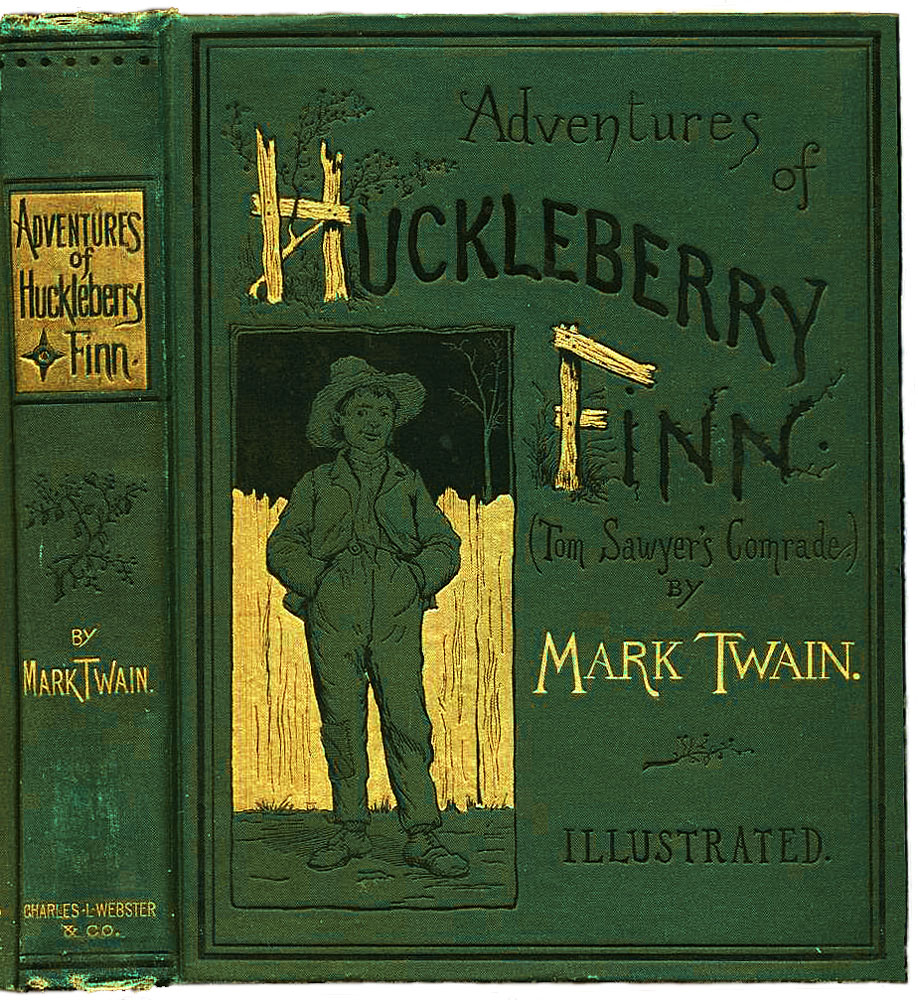
If you're interested in reading more southern lit (the really good kind), you need to start with The Adventures of Huckleberry Finn by Mark Twain. This book isn't just the beginning (and reigning authority) of southern literature, it's the beginning of American literature. The book is incredible. There just isn't much else to say. It's a long one, though, so if this is going on your summer reading list, expect to spend free time on little else.
Join me next time where I'll take a radical turn from the roots of southern literature and tackle the next text assigned to me in my formal education: Romeo and Juliet. I have little peace to speak about the Bard, so just consider the next installment an overall investigation of William Shakespeare. See you next time!
Wednesday, July 27, 2011
Tuesday, July 26, 2011
Cheaper by the Dozen
I'm sure that many of you haven't read this novel. A really bad comedy was made from the story several years ago, so you may at least recognize the title.
To skip to the good stuff, let's just borrow Wikipedia's summary section on the book itself:
"Cheaper by the Dozen is a biographical book written by Frank Bunker Gilbreth, Jr. and Ernestine Gilbreth Carey that tells the story of time and motion study and efficiency experts Frank Bunker Gilbreth and Lillian Moller Gilbreth, and their twelve children. The book focuses on the many years the family resided in Montclair, New Jersey. It was adapted to film by Twentieth Century Fox in 1950.
The title comes from one of Frank Sr.'s favorite jokes: it often happened that when he and his family were out driving and stopped at a red light, a pedestrian would ask, "Hey, Mister! How come you got so many kids?" Gilbreth would pretend to ponder the question carefully, and then, just as the light turned green, would say, "Well, they come cheaper by the dozen, you know," and drive off.
In real life, the Gilbreths' second eldest child, Mary, died of diphtheria at age six. The book does not explicitly explain the absence of Mary Gilbreth; it was not until the sequel, Belles on Their Toes, was published that her death is mentioned in a footnote.
Belles on Their Toes, published in 1950, outlines the family's adventures after Frank Sr.'s death in 1924. Belles on Their Toes was also made into a movie, starring Jeanne Crain and Myrna Loy, in 1952. This film focuses on the lives of Mrs. Gilbreth and her children."
Essentially, Frank Gilbreth's life work is to increase efficiency both in businesses and in his own family. He eliminates unnecessary steps or movements to maximize profits. The allure of the novel is that Frank took his work home, and used the same logic in managing his twelve children.
This book is a gimmick. The only reason anyone should ever care to read it is because for some reason that escapes me, we are interested with couples that have more children than they can afford to support. Beyond this, expect some funny anecdotes and interesting perspectives on an abnormal upbringing.
Not only did I have to read this, but I had to read it popcorn style with my entire class out loud in the eight grade. I think of it like our teacher's way of proving that we COULD read, rather than challenging us with anything interesting.
Now if you like reading about children growing up in unique situations told in a darkly humorous narrative voices, here's the book you should be reading:
Angela's Ashes by Frank McCourt. McCourt is brilliant. There's more to his writing than the writing itself, unlike what one of my favorite UMass professors refers to as "beach novels". Read this book before you die. There is a sequel to the memoir, 'Tis, but it isn't as good. It's excellent, but not brilliant like Angela's Ashes.
Join me next time for the next text of my academic career: To Kill a Mockingbird by Harper Lee.
Tuesday, July 19, 2011
Hello, world!
And when I say world, of course I mean America, because we live in a bubble. Before we embark on this journey together, we have some preliminary foundation to lay and ground rules to cover.
Ground rules:
1. It is out of freedom, not laziness, that I won't cite some sources that may not seem common knowledge. Why? Because I can. It's my blog, not a stuffy analytical college paper, and if you want to fact check, you can do the research yourself. I'm here to share my opinion. I won't generally address anything that I haven't read about or experienced extensively, so don't feel as though I'm making facts up.
2. When I enjoy literature, whether it be because of narrative structure, creative and unique concepts, or anything else, I will sing praises to it. When I read a book that I know (not feel, but know) is a waste of my time, I'm going to criticize it harshly, like a 5th grade bully stealing milk money from the bookworm nerd who sits alone at a table nearest the exit to the lunchroom. Why? Because I was that kid, and if years of being harassed and millions spent today in anti-bullying campaigns have taught me anything, it's that you should always pay it forward... in a creative outlet that doesn't do harm to others, mind you.
3. I mix metaphors constantly. I douse my criticism in sarcasm and light it on fire. I use melodramatic examples to prove my points. These aren't crutches, they are a part of my writing style. Whoever told you mixing metaphors is wrong is a fool. Sarcasm and a rapier-wit do wonders for comedic timing. Everyone loves melodrama; it's why TV is so popular. Remember, every criticism you receive in writing is a SUBJECTIVE OPINION, not law. Think about that while you read anything, especially whilst deciphering illegible undergraduate English professor scribble in the margins of your papers.
4. You are the ones with the power. The students, not the professors. YOU define the contemporary literary canon, because YOU are contemporary readers. Don't ever allow a professor to take that power away from you. If they try, spray them in the face with a squirt bottle. Bad professor! Bad!
5. It seems prudent to have five ground rules, as four is a weaker number than five. Let it be written.
Foundation:
Alright folks, this blog isn't just for English majors. At its core, it's a means to grapple with literature that may or may not suck ass through a straw (GASP!!! PROFANITY!) in a pressure-free environment. Here you can be completely open with your opinions on novels, short stories, poetry, films, paintings, sidewalk-chalk renderings, and smoke signals. Here we understand that teachers aren't infallible, and that everything prescribed to us from Kindergarten onward isn't the best stuff out there... by FAR.
For those of you who still don't know what a literary canon is, let's tackle that quarterback now.
A literary canon is a stuffy phrase to describe the literature that is most representative of any given era. The Victorian era has a canon. Literature of the American south has a canon. Gays and lesbians have a canon- and a parade, too. Here, we're really not so much interested in the old stuff. Why? Because without being alive in the era, how the hell are we supposed to know what literature defines it?
"Because, Matt," you say, pushing your ultra-thin glasses midway up your nose, "We have collections of literature from these eras. We can read them all, find patterns, and pick out examples that best represent trends in these time periods."
Actually, Mr. The Man, history, much like memory, is imperfect. We have collections of literature that were exposed publicly, were successful, and were widely read and distributed. Does that mean by default that they represent an era? Do you feel particularly represented by the Twilight series just because it sold loads of copies? I DIDN'T THINK SO, AND IF YOU JUST SAID YES, GET THE INTERCOURSE OFF OF MY WEBSITE.
Anyway, we might not be interested in redefining the canons of ages past, but we will certainly criticize the "antiques" from a modern perspective. I'll warn you right now, Shakespeare isn't sacred.
I just thought of a fifth ground rule:
5. I can and will digress constantly. I promise that if I bring something up, I'll finish the thought... it may just not be immediately or in any assemblance of order.
So here's the way this will work. I'm going to climb back into the far, dusty reaches of my brain and pull out every reading list I've ever been given from Junior High to today. I invite you to share your perspectives, opinions, and rantings alongside mine. Feel free to disagree. Remember that we're here to criticize the work, not each other. Let's not make it personal to anyone other than the author. I'll be asking you through this entire process to include books I haven't covered yet at the ends of your comments, so that by the time I've exhausted my own bookshelf, we can begin networking outward.
As a final comment, I want to make it clear that the extent of one's vocabulary does not qualify or disqualify them from having an opinion about literature. Herein is the entire point to this project. Everyone needs to be involved in this conversation. I don't even care if you can't read. Just hit the pretty buttons until a response box pops up, and mash your fingers on the keys until you're satisfied. Post pictures in response if you want. Record yourself performing an interpretive dance about the text if it makes you happy in the down-below. Just get involved.
With all of that said, we'll continue next time with the first novel I was ever asked to read in Junior High:
Cheaper by the Dozen by Frank Gilbreth and Ernestine Gilbreth Carey.
Ground rules:
1. It is out of freedom, not laziness, that I won't cite some sources that may not seem common knowledge. Why? Because I can. It's my blog, not a stuffy analytical college paper, and if you want to fact check, you can do the research yourself. I'm here to share my opinion. I won't generally address anything that I haven't read about or experienced extensively, so don't feel as though I'm making facts up.
2. When I enjoy literature, whether it be because of narrative structure, creative and unique concepts, or anything else, I will sing praises to it. When I read a book that I know (not feel, but know) is a waste of my time, I'm going to criticize it harshly, like a 5th grade bully stealing milk money from the bookworm nerd who sits alone at a table nearest the exit to the lunchroom. Why? Because I was that kid, and if years of being harassed and millions spent today in anti-bullying campaigns have taught me anything, it's that you should always pay it forward... in a creative outlet that doesn't do harm to others, mind you.
3. I mix metaphors constantly. I douse my criticism in sarcasm and light it on fire. I use melodramatic examples to prove my points. These aren't crutches, they are a part of my writing style. Whoever told you mixing metaphors is wrong is a fool. Sarcasm and a rapier-wit do wonders for comedic timing. Everyone loves melodrama; it's why TV is so popular. Remember, every criticism you receive in writing is a SUBJECTIVE OPINION, not law. Think about that while you read anything, especially whilst deciphering illegible undergraduate English professor scribble in the margins of your papers.
4. You are the ones with the power. The students, not the professors. YOU define the contemporary literary canon, because YOU are contemporary readers. Don't ever allow a professor to take that power away from you. If they try, spray them in the face with a squirt bottle. Bad professor! Bad!
5. It seems prudent to have five ground rules, as four is a weaker number than five. Let it be written.
Foundation:
Alright folks, this blog isn't just for English majors. At its core, it's a means to grapple with literature that may or may not suck ass through a straw (GASP!!! PROFANITY!) in a pressure-free environment. Here you can be completely open with your opinions on novels, short stories, poetry, films, paintings, sidewalk-chalk renderings, and smoke signals. Here we understand that teachers aren't infallible, and that everything prescribed to us from Kindergarten onward isn't the best stuff out there... by FAR.
For those of you who still don't know what a literary canon is, let's tackle that quarterback now.
A literary canon is a stuffy phrase to describe the literature that is most representative of any given era. The Victorian era has a canon. Literature of the American south has a canon. Gays and lesbians have a canon- and a parade, too. Here, we're really not so much interested in the old stuff. Why? Because without being alive in the era, how the hell are we supposed to know what literature defines it?
"Because, Matt," you say, pushing your ultra-thin glasses midway up your nose, "We have collections of literature from these eras. We can read them all, find patterns, and pick out examples that best represent trends in these time periods."
Actually, Mr. The Man, history, much like memory, is imperfect. We have collections of literature that were exposed publicly, were successful, and were widely read and distributed. Does that mean by default that they represent an era? Do you feel particularly represented by the Twilight series just because it sold loads of copies? I DIDN'T THINK SO, AND IF YOU JUST SAID YES, GET THE INTERCOURSE OFF OF MY WEBSITE.
Anyway, we might not be interested in redefining the canons of ages past, but we will certainly criticize the "antiques" from a modern perspective. I'll warn you right now, Shakespeare isn't sacred.
I just thought of a fifth ground rule:
5. I can and will digress constantly. I promise that if I bring something up, I'll finish the thought... it may just not be immediately or in any assemblance of order.
So here's the way this will work. I'm going to climb back into the far, dusty reaches of my brain and pull out every reading list I've ever been given from Junior High to today. I invite you to share your perspectives, opinions, and rantings alongside mine. Feel free to disagree. Remember that we're here to criticize the work, not each other. Let's not make it personal to anyone other than the author. I'll be asking you through this entire process to include books I haven't covered yet at the ends of your comments, so that by the time I've exhausted my own bookshelf, we can begin networking outward.
As a final comment, I want to make it clear that the extent of one's vocabulary does not qualify or disqualify them from having an opinion about literature. Herein is the entire point to this project. Everyone needs to be involved in this conversation. I don't even care if you can't read. Just hit the pretty buttons until a response box pops up, and mash your fingers on the keys until you're satisfied. Post pictures in response if you want. Record yourself performing an interpretive dance about the text if it makes you happy in the down-below. Just get involved.
With all of that said, we'll continue next time with the first novel I was ever asked to read in Junior High:
Cheaper by the Dozen by Frank Gilbreth and Ernestine Gilbreth Carey.
Subscribe to:
Posts (Atom)